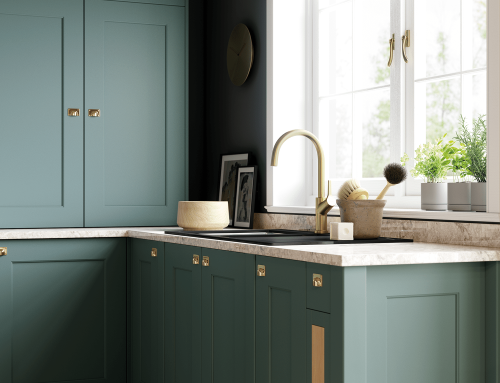

Replacing your kitchen doors can change the whole look of a kitchen without the cost and disruption of a full refit. If you are thinking about a new style, shaker is one of the first you will come across.
But what actually makes a kitchen a shaker kitchen, and which shaker doors are right for your home?
In this guide, we explain where the style comes from, how the different shaker doors compare, which colours and materials to consider, and what to check before you order replacement doors for your existing units.
What is a shaker kitchen?
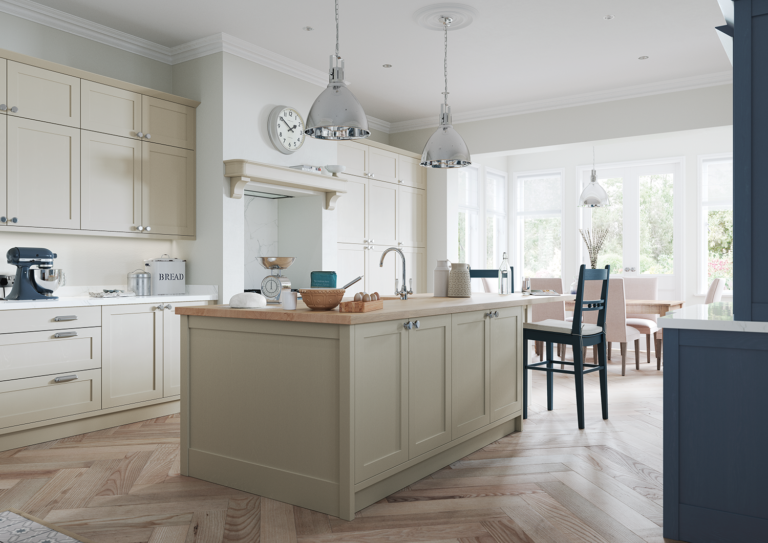
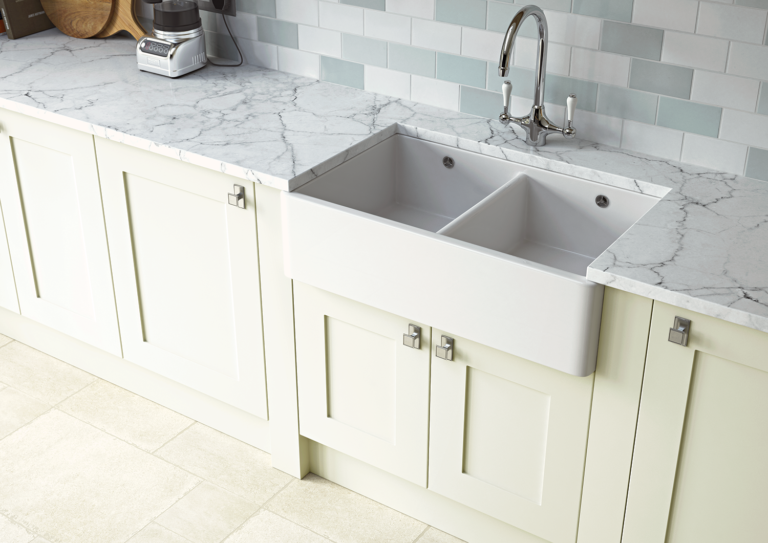
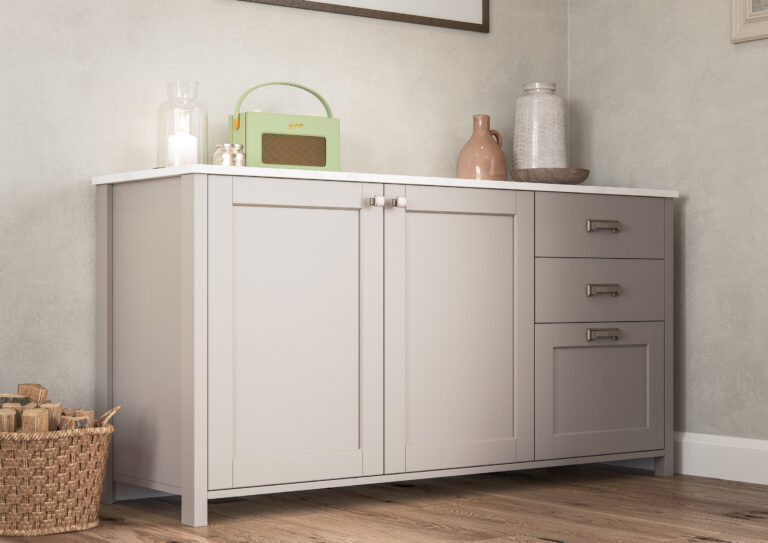
The frame is made from two upright pieces, called stiles, and two horizontal pieces, called rails. The centre panel sits slightly lower than the frame. That is what gives a shaker door its familiar shadow line.
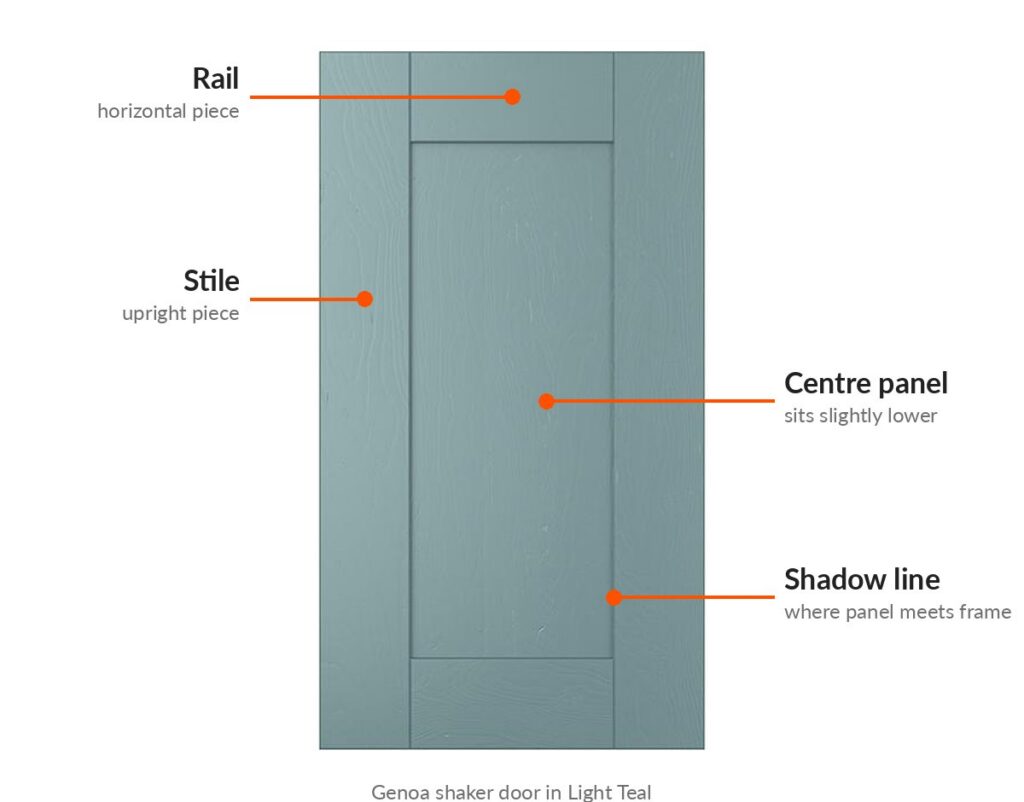
There are a few variations on the basic design. Some doors are made from five separate pieces, so you can see fine lines where the frame joins. Others are machined from a single piece of MDF, which gives the same look with a seamless finish. Some have a plain, square inner edge. Others add a fine bead around the panel for a more traditional feel.
All of them are still shaker doors.
Why is it called a shaker kitchen?
The name comes from the Shakers, a religious community founded in England in the 18th century that later settled in America. The Shakers made their own furniture and believed it should be simple, well made and useful, without decoration for its own sake.
The frame-and-panel door was one result. It was practical to make, strong and easy to keep clean. The same basic design is still used in kitchens today.
Shaker door styles compared
The frame and panel stay the same. What changes is the width of the frame, how the door is made and how it is finished, and those details make a real difference to how your kitchen feels.
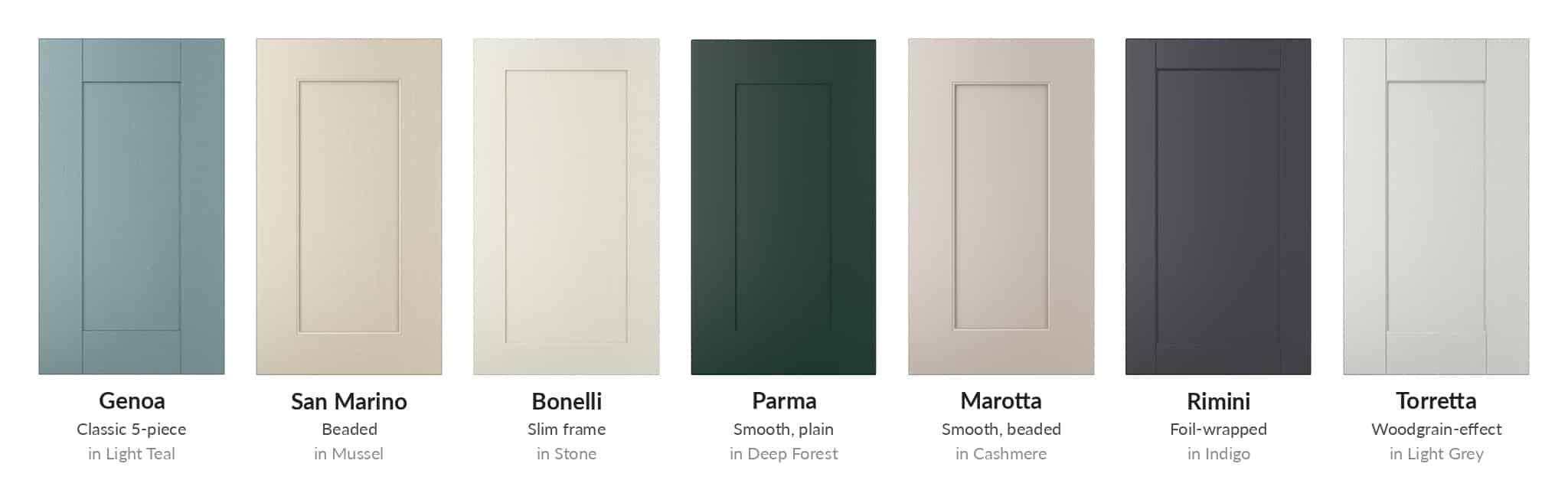
Here is how our seven shaker kitchen door ranges compare:
| Range | Style | Construction and finish | Colours | Standard door* |
|---|---|---|---|---|
| Genoa | Classic 5-piece | Solid ash frame and flat centre panel, with fine V-grooves at the joints. Brushed painted finish that brings out the grain | 26 | £106.69 |
| San Marino | Traditional, beaded | Solid ash with a fine bead around the centre panel, painted all round | 27 | £106.69 |
| Bonelli | Slim-frame | 20mm solid ash frame and flat centre panel. The paint lets the grain show through | 26 | £107.50 |
| Parma | Smooth, plain | One-piece MDF with a plain inner edge and a smooth painted finish | 26 | £103.62 |
| Marotta | Smooth, beaded | One-piece MDF with a decorative bead and a smooth painted finish | 26 | £103.62 |
| Rimini | Foil-wrapped | MDF with a matt foil finish, bevelled edges and V-grooves. Wipe-clean | 6 | £50.84 |
| Torretta | Woodgrain-effect | 22mm MDF with an ash-effect foil and open-grain texture | 8 | £50.85 |
*Price for a standard 715 × 397mm door, excluding VAT.
Which shaker door is right for your kitchen?
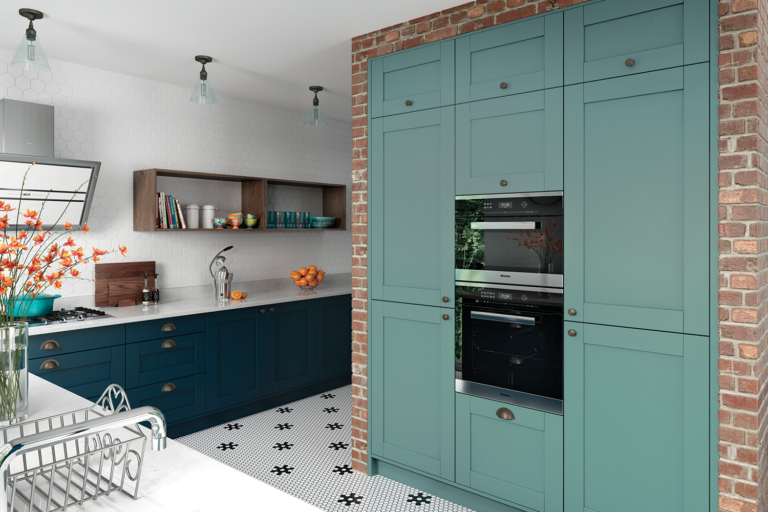
Genoa or San Marino
Choose Genoa for a classic shaker, or San Marino if you like the extra detail of a bead.
Are shaker kitchens still in style?
This is one of the questions we hear most. People like the look of shaker but worry it will feel dated in a few years.
In our experience, the door itself is fairly neutral. It is the colour, the handles and the worktop that decide whether a shaker kitchen feels traditional or modern.
A traditional shaker kitchen
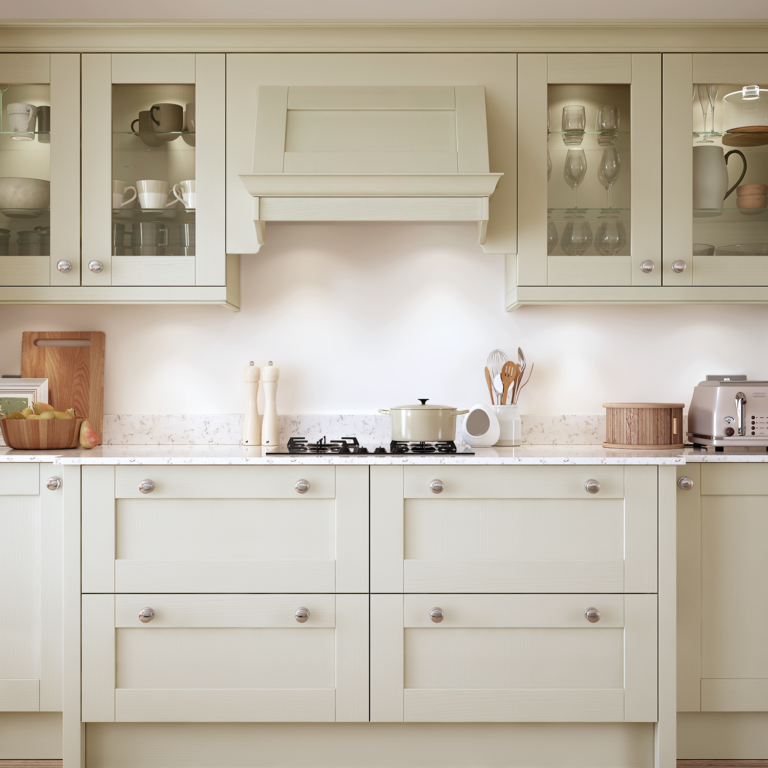
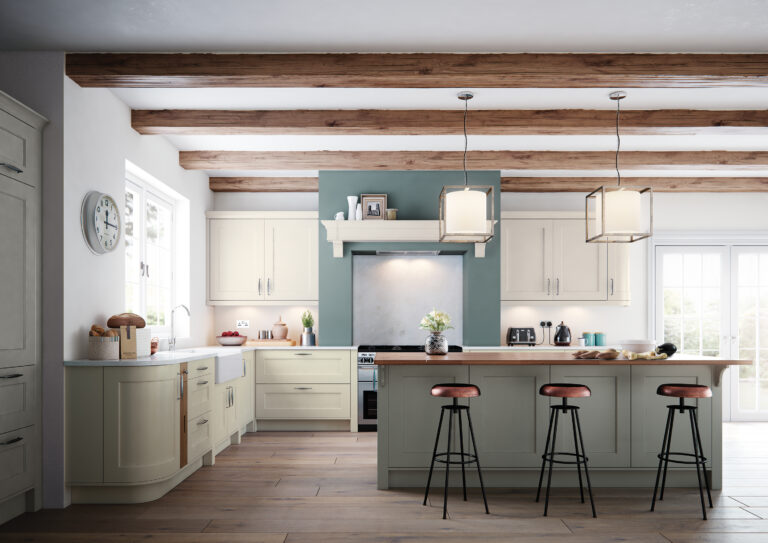
A traditional look usually starts with a classic or beaded door, such as Genoa, San Marino or Marotta. Pair it with cream, ivory or a heritage green, add knobs or cup handles, and finish with a timber worktop.
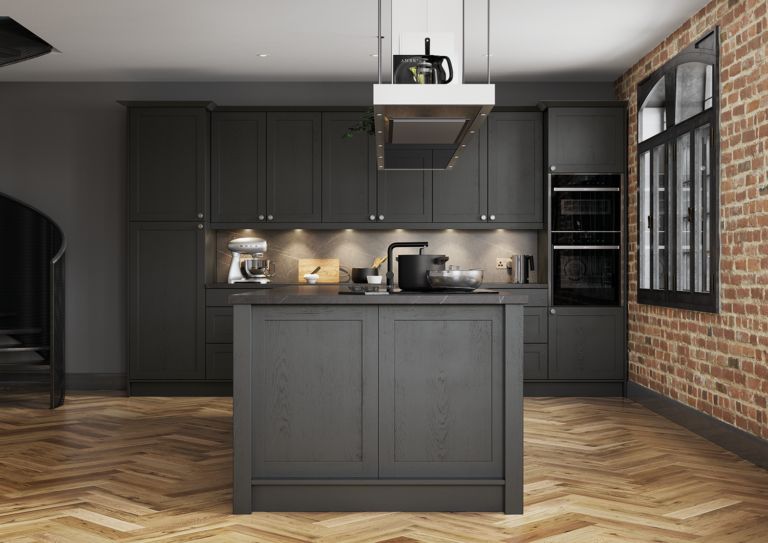
A modern shaker kitchen
For a modern look, choose a slim frame such as Bonelli, or a plain one-piece door such as Parma. Deeper or muted colours like charcoal, navy and sage work well, with slim bar handles and a quartz or plain worktop.
What colours work best in a shaker kitchen?
Our painted shaker ranges come in 26 to 27 colours each. Torretta comes in 8 woodgrain-effect shades and Rimini in 6.
The colours we see chosen most often for shaker kitchens are:
- White: keeps a smaller or north-facing kitchen feeling bright, and works with almost any worktop. A soft white feels less clinical than a brilliant white.
- Cream and ivory: a warmer, country feel, especially with oak worktops and brass handles.
- Grey: from pale grey to graphite. Lighter greys are easy to live with. Darker greys work well on an island.
- Green: sage and deeper greens bring a calm, natural feel and pair well with wood.
- Navy: a confident, tailored look, particularly with brass handles and a white worktop.
- Two-tone: a darker colour on the base units or island, with a lighter colour on the wall units.
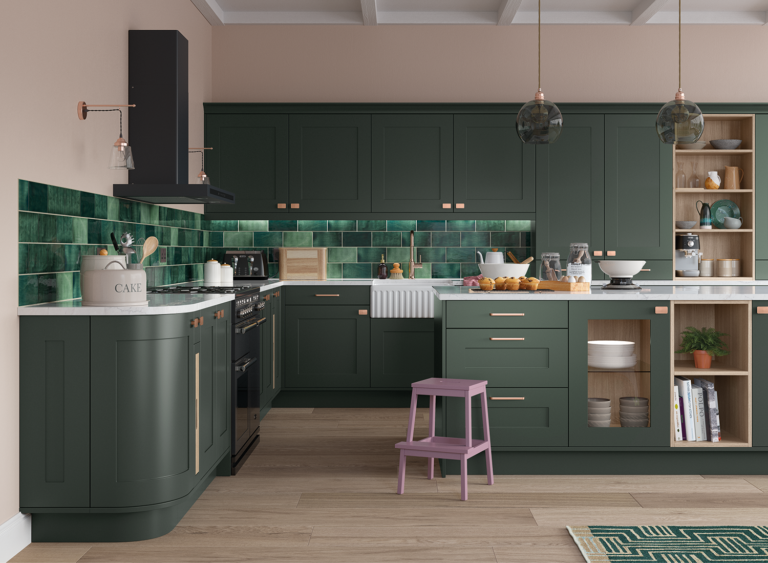
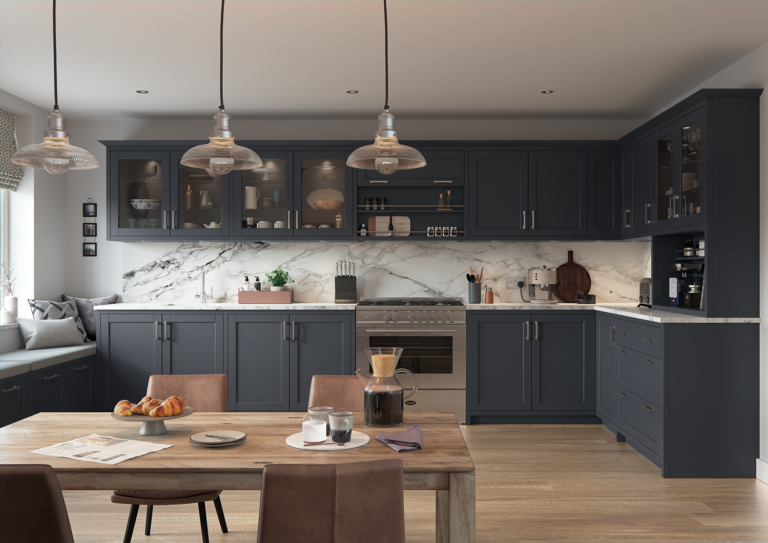
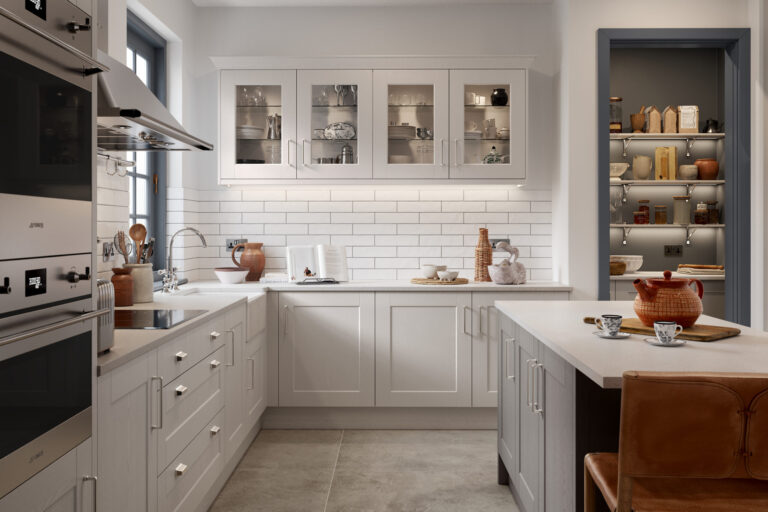
Which shaker door material is best?
There is no single best material. It depends on your budget and how you use your kitchen.
| Material | Our ranges | Good for | Worth knowing |
|---|---|---|---|
| Painted solid ash | Genoa, San Marino, Bonelli | A real-wood door with the grain showing through the paint | Fine lines at the joints are a natural feature of painted five-piece wood doors |
| Painted MDF (one-piece) | Parma, Marotta | A smooth, seamless painted finish with no joints | A hard knock can chip the paint, as with any painted door |
| Foil-wrapped MDF | Rimini, Torretta | A lower price and a wipe-clean finish for busy kitchens | Not suitable for repainting. Check the guidance for doors next to ovens and other heat sources |
Shaker vs slab vs handleless: what is the difference?
| Shaker | Slab | Handleless | |
|---|---|---|---|
| Look | A frame with a recessed panel | Completely flat | Flat, with a built-in grip |
| Suits | Traditional, country and modern kitchens | Modern and minimal kitchens | Modern and minimal kitchens |
| Cleaning | Wipe the inner edges of the frame now and then | The easiest to wipe | Easy, but clean the grip rail |
| Handles | Yes: knobs, cup handles or bars | Usually bars | None |
How much do shaker kitchen doors cost?
When you replace only the doors and drawer fronts, you keep your existing units and worktops. You only pay for what is on show.
Here are three examples from our shaker ranges, each for a standard 715 × 397mm door:
Prices exclude VAT.
Your total will depend on how many doors and drawer fronts you need, their sizes, and any end panels, plinths or cornice. For a fuller breakdown, read our guide to the cost of replacing kitchen cupboard doors.
Can you fit shaker doors to your existing kitchen units?
In most cases, yes. If your cabinets are in good condition, new shaker doors and drawer fronts can be made to fit them.
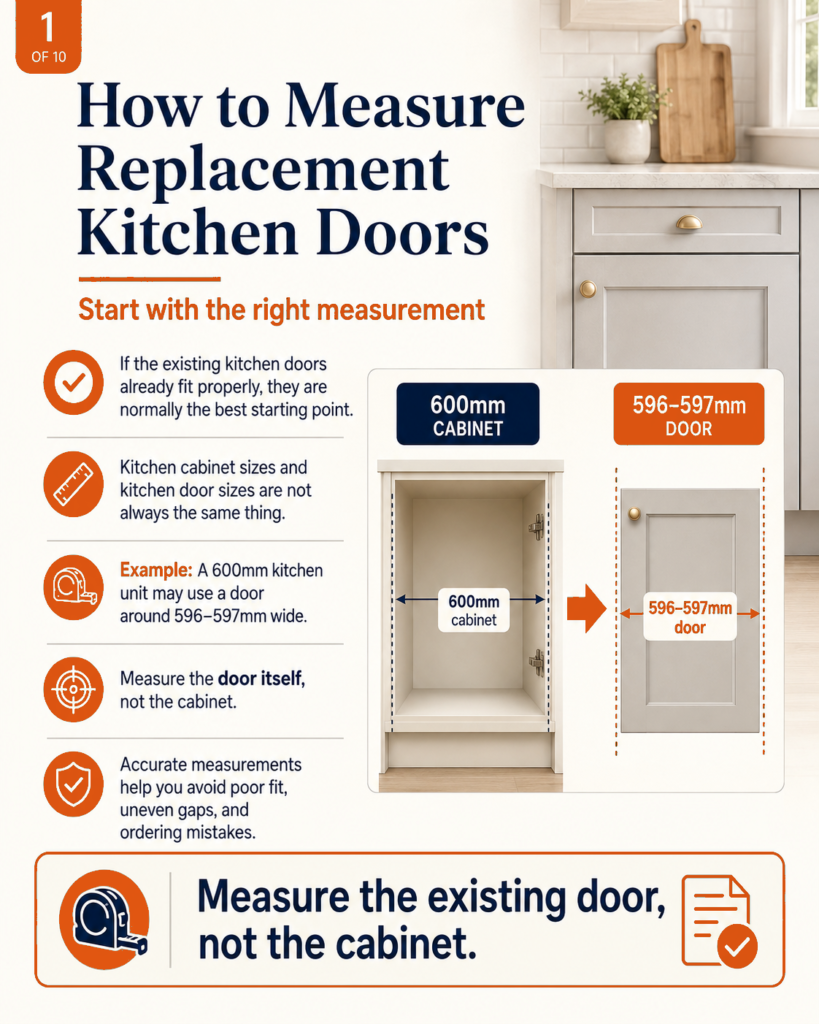
The key is to measure each existing door, not the cabinet.
Before you order, check:
- Your units are sound. They should be level, square and free from water damage. New doors will not hang properly on a damaged cabinet.
- The size of every door. Measure the height and width of each door in millimetres. Doors that look the same can differ by a few millimetres.
- Your hinge positions. If you want doors with pre-drilled hinge holes, note where your current hinges sit and which side each door opens.
- Your drawer fronts and extras. List drawer fronts separately, along with any end panels, plinths and cornice.
- Integrated appliance doors. Dishwasher and fridge doors need to suit the appliance, so check these one by one.
- Clearance. Make sure doors and handles will open freely next to walls, appliances and corner units.
Our step-by-step guide on how to measure for replacement kitchen doors covers each of these in detail.
Where to fit handles on shaker doors
- Base unit doors: fit the handle on the frame opposite the hinge, near the top edge.
- Wall unit doors: fit the handle near the bottom edge, so it is easy to reach.
- Drawers: centre the handle. On wide pan drawers, use a longer bar or two knobs.
What we would recommend before you order
Start with how you use your kitchen. In a busy family kitchen, a wipe-clean foil door such as Rimini or Torretta is very practical. If a real-wood finish matters more to you, look at Genoa, San Marino or Bonelli.
Check your units before you choose your doors. New doors cannot fix a cabinet that is swollen, damaged or out of square. It is better to know now.
Order everything together. Drawer fronts, end panels and plinths should be ordered at the same time as your doors, so the colour and finish match across the kitchen.
Ask if you are not sure. A quick question about a size, a hinge position or a colour is much easier to sort out before you order than after.
Frequently asked questions
Can you paint shaker kitchen doors?
Painted solid wood and painted MDF doors can be repainted with the right preparation, usually a light sand and a suitable primer. Foil-wrapped doors are not a good candidate, because paint does not bond well to the foil.
Can you wrap shaker kitchen doors?
It is possible, but the recessed panel and inner corners make shaker doors difficult to wrap neatly, and the film can lift at the edges over time. New doors usually give a better, longer-lasting finish.
How do you clean shaker kitchen doors?
Wipe them with a soft cloth and warm, mildly soapy water, then dry them. Use a soft brush for the inner corners of the frame, where dust tends to collect. Avoid abrasive pads and harsh chemicals.
Are shaker doors more expensive than slab doors?
A framed door takes more work to make, so it can cost a little more than a flat door in the same material. Foil-wrapped shaker doors such as Rimini and Torretta keep the look affordable.
How thick are shaker kitchen doors?
It depends on the range. Torretta is a 22mm door, for example, and Bonelli has a 20mm solid ash frame. Check the range details if you are matching existing doors or have tight clearances.
Choose the look first, then get the details right
A shaker kitchen is one of the simplest ways to give your kitchen a fresh look that will last. Choose the style and colour you love, pick the material that suits how you live, then take your time with the measurements. When you are ready, browse our shaker kitchen doors, or get in touch if you would like help putting your door list together.